
You can usually tell something is off before you click. The setup looks close enough to justify, but not clean enough to trust. You feel that small internal push to participate anyway, because sitting out feels like wasted time. Then you take the trade, and only after the fact do you start assembling the explanation. That explanation is the real trade. The entry was just the visible part.
Most traders are not bad at reading charts. They are bad at admitting why they do what they do when the pressure shows up. That pressure does not have to be dramatic. It can be boredom, irritation, or the urge to feel like you are still “in it.” If you keep losing, it is usually not because the market is unusually hard. It is because you keep making decisions you would not defend if you had to describe them plainly.
I am using a reflective diagnosis spine for this one. The goal is not to list a bunch of common mistakes. You already know the mistakes. The goal is to expose the internal moves that let those mistakes happen without feeling like mistakes.
The lie is rarely the trade itself
The obvious lie is what people imagine. “I am disciplined.” “I have a plan.” “I do not overtrade.” Some traders say these things out loud. Most do not. The real lies are smaller and more practical. They appear mid-session, and they sound like reasonable thoughts.
It is going to come back to the level.
This is basically my setup.
I will just reduce size and see.
I do not want to miss another move.
The stop was too tight anyway.
Each one is plausible. That is why it works. Plausibility is enough to get you to click. It is also enough to keep you from learning, because a plausible story can replace accountability. If you can explain it, you can excuse it.
The consequence is not just one bad trade. The consequence is that your mistakes stop being visible to you. They become “context.”
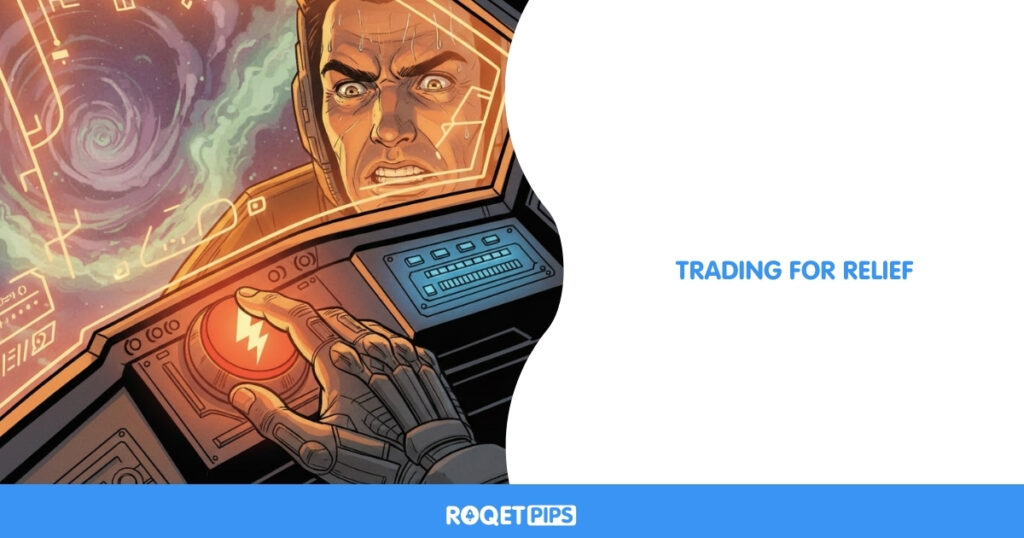
You think you want profits, but you often want relief
This is the part traders resist because it sounds psychological in the vague sense. I mean it in a very literal sense. A lot of trading decisions are made to change how you feel in the next sixty seconds. The market is uncertain, and uncertainty is uncomfortable. Taking action creates a brief sense of control, even if the action is not good.
If you are honest, you can see this in the timing of your mistakes. You do not break rules randomly. You break them when you are mentally tired, when you are irritated, when you have been watching price do nothing, or when you feel behind. The trade is not solving a market problem. It is solving a mood problem.
Once you see that, the behavior becomes predictable. When your goal becomes relief, you start bending standards, because standards slow you down. Relief wants speed. Relief wants participation. Relief does not care if the setup is real.
The market does not need to trick you, you trick yourself
There is a common belief that the market “hunts stops,” “manipulates,” or “punishes retail.” Sometimes price does whip around, and sometimes it does feel personal. The belief survives because it gives you an external villain. It also keeps your self-image intact. If the market is the problem, then you are competent and unlucky.
The more uncomfortable truth is that most traders hand the market their money by walking into the same situations with the same internal script. The script is not a mystery. It starts with a decision that does not meet criteria. Then it continues with a justification that makes the decision feel acceptable. Then it ends with a lesson that is aimed at the wrong target.
You tell yourself you need a better entry model. You actually needed to not enter.
You tell yourself the stop placement was wrong. You actually moved the stop because you did not want to be wrong.
You tell yourself you need to be more patient. You actually need to reduce the number of moments where patience is required.
Most trading “psychology” is just incentives. If you reward yourself for participation, you will participate. If you reward yourself for clean execution, you will execute. Most traders reward themselves for feeling active.
Why your journaling might be making you worse
Most journals record events. Entry, exit, result. Maybe a note about what you saw. That is not useless, but it misses the part that matters. The lie is not in the chart. The lie is in the reasoning that made the trade feel justified in the moment.
If you journal after the trade, your brain already knows the outcome. Now it will rewrite your motive to match the outcome. If the trade won, you will remember yourself as confident and intentional. If it lost, you will remember yourself as unlucky or “slightly early.” The narrative will be clean either way.
You need to catch the decision before it gets cleaned up. The only way to do that is to force specificity. One sentence. Why did you enter. Not a paragraph. Not a list of market conditions. One sentence that could have been written before the trade.
If you cannot write that sentence, you probably did not have a reason. You had a feeling.
[ADS]
The soft language that keeps you stuck
Watch the words traders use when they do not want to admit what happened.
I got caught.
It was choppy.
The market was weird.
I was just testing.
It was a small one.
I was early.
These phrases are not always lies. They are lies when they become your default translation for poor behavior. “I was early” is often code for “I entered without confirmation.” “It was choppy” is often code for “I forced trades in a range.” “I was testing” is often code for “I did not want to admit I was impulsive.”
Soft language has a cost. It prevents you from seeing your own patterns clearly. It also prevents you from building constraints that would actually help. If you cannot name the behavior, you cannot design against it.
The market is not fooled by your language. Your account statement is not fooled by your language. The only person it fools is you.
The most common lie is about risk
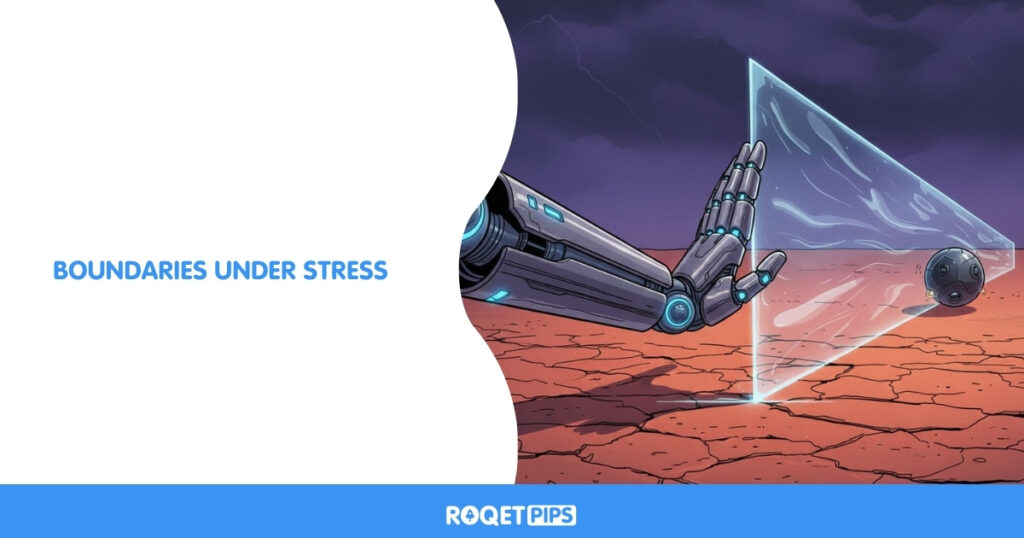
Traders love to say they respect risk. Many of them do, right up until risk becomes real. That is when the second layer appears. A stop is supposed to be a boundary. Under stress, many traders treat it like a negotiation.
You move it “a little” because it is close.
You widen it “temporarily” because a wick might hit it.
You remove it “just for a second” because you want to manage manually.
The lie is not that you moved the stop. The lie is that you tell yourself it was a rational improvement rather than a stress response. If it was a rational improvement, it would be defined before the trade. If it only appears when you are down and tense, it is not improvement. It is avoidance.
The consequence is simple and brutal. You create losses that do not fit your risk model. Once that happens, your entire edge calculation becomes fiction. You can have a decent strategy and still lose because your loss distribution is no longer controlled.
The lie that feels like experience
Some traders do not call it a rule break. They call it discretion. That word is dangerous because it can be real. Experienced traders do use discretion. The difference is that their discretion has limits and it is measurable. Most traders use discretion as a cover for inconsistency.
If you find yourself saying “context” often, ask a blunt question. Can you define your discretion in advance, in a way that another trader could follow. Can you list what invalidates it. Can you track it separately in your journal. If the answer is no, it is not discretion. It is a loophole you step through when you feel pressure.
This is why trading feels unstable for so many people. They are not running a strategy. They are running a set of rules plus an untracked exception engine. The exception engine is powered by emotion, and it changes daily. That makes the results feel random.
Why this keeps happening even when you know better
Most traders assume that awareness should fix behavior. If you know the mistake, you should stop doing it. That is not how human behavior works. Knowing is not a constraint. It is just information. The thing that changes behavior is friction.
If it is easy to break a rule, you will break it when stressed.
If it is easy to take a near-miss setup, you will take it when bored.
If it is easy to move a stop, you will move it when the loss feels close.
This is not a character flaw. It is design. If your trading environment requires you to be heroic and disciplined for hours, it is badly designed. You are relying on willpower as your primary risk control. That fails eventually for everyone.
The traders who improve usually do something boring. They reduce decision points. They limit market selection. They set tighter definitions. They accept that fewer trades is not laziness, it is precision.
[ADS]
The replacement: a standard that your excuses cannot bypass
Here is the standard that tends to work. You do not judge yourself by outcomes. You judge yourself by whether the trade met criteria at the moment you entered, and whether you managed it according to pre-defined rules. That sounds basic. The hard part is that it removes most stories.
A trade that loses but was executed cleanly is not a problem.
A trade that wins but violated rules is a problem.
A trade that “almost” met criteria is a no, not a maybe.
A stop that is moved without a pre-defined rule is a rule break, not management.
Once you adopt that standard, the excuses become less useful. They can still exist, but they do not change the label. The label matters because it affects what you correct. If you label a rule break as discretion, you will not correct it. If you label it as a rule break, you will.
This is also why many traders avoid this standard. It makes the truth clearer, and clarity creates pressure to change. Some people would rather stay confused than feel that pressure.
A quiet end to a noisy problem
You do not have to become cold or robotic. You do not have to pretend emotions do not exist. What you need is to stop letting emotions write the explanation for your actions. When the explanation is always flattering, the behavior stays the same.
The market is hard, but it is not the main reason you lose. The main reason is that you keep giving yourself permission to do things you already know are not part of your edge. The permission slips are disguised as reasonable thoughts. They sound mature. They sound contextual. They sound like experience.
They are still permission slips.
If you wanted one grounded question to sit with, it is this. When you review your last ten trades, how many of them required an explanation to feel acceptable. Not an explanation of market behavior, an explanation of your decision. If the number is high, that is not complexity. That is self-deception.
Leave a Reply