FOMO, or the “fear of missing out,” is a psychological state where a trader feels an overwhelming urge to enter a position based on the movement of others rather than their own technical criteria. In the high-velocity environment of financial markets, this often manifests as buying an asset after a significant price surge or selling after a sharp crash. It is the physical manifestation of reacting to price rather than anticipating it.
What this is
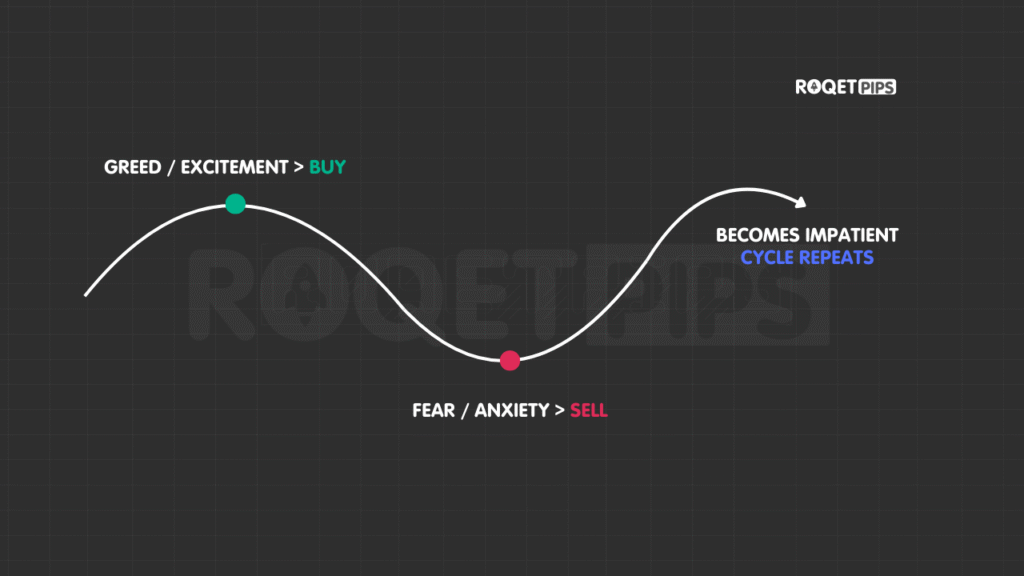
FOMO is a byproduct of herd mentality. When price moves aggressively in one direction, it creates a visual narrative on the chart that “everyone is making money except me.” This triggers a survival instinct that pushes the trader to ignore their strategy and join the crowd.
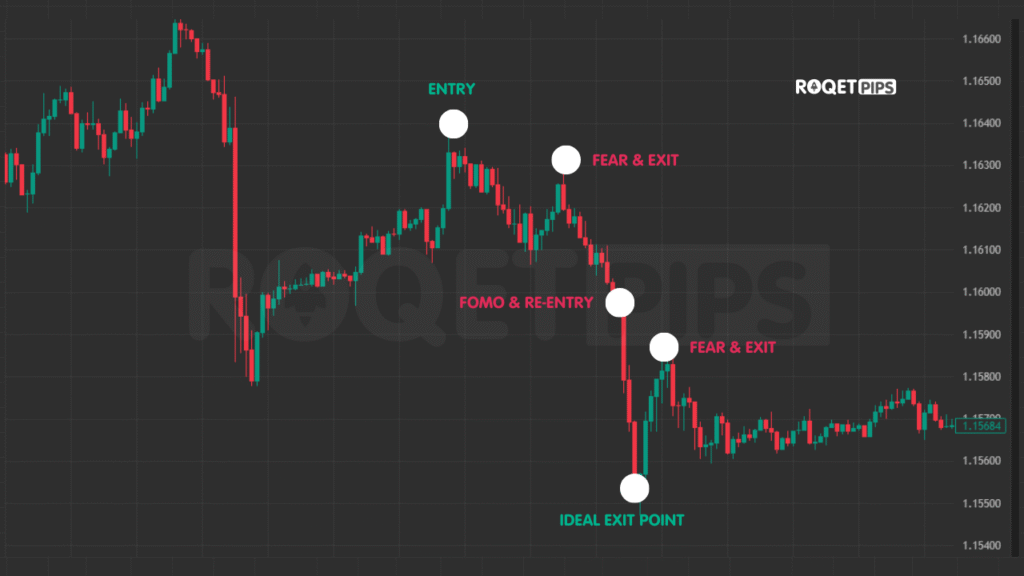
On a chart, FOMO is most visible through “chasing” behavior. A trader sees a long, vertical green candle and enters at the very top, fearing they will miss the rest of the move. Mathematically, this is the worst time to enter because the risk-to-reward ratio has likely collapsed; the price has already moved far from a safe “stop loss” level.
[ADS]
Why traders pay attention to it
Understanding FOMO is essential because it is a primary driver of market liquidity. Professional market participants—often referred to as “smart money”—rely on the emotional reactions of the “herd” to fill their own orders.
When a crowd rushes to buy at the top of a rally due to FOMO, they provide the necessary liquidity for experienced traders to sell their positions and take profit. By recognizing the signs of FOMO in the market, a trader can avoid becoming the “exit liquidity” for others.
[ADS]
What it tends to show on a chart
FOMO creates specific visual patterns on a price chart, most notably the “parabolic move.” This is characterized by price candles that get progressively larger and more vertical as the rally nears its end.
As the move becomes steeper, it detaches from the moving averages. This gap between the price and its recent average is a visual representation of FOMO. The wider the gap, the more likely the move is being driven by emotion rather than fundamental value or sustainable buying pressure.
How traders usually apply it
Practical traders apply an understanding of FOMO by practicing “counter-cyclical” thinking. Instead of joining the crowd, they look for signs of exhaustion.
One common technique is to monitor volume. During a FOMO-driven rally, volume often spikes to an extreme level. If price continues to rise but volume begins to drop, it suggests the “herd” has finished buying and there is no one left to push price higher. This is often where a trend reversal begins.
Instead of entering during the vertical move, a disciplined trader waits for a “retest.” They allow the emotional move to play out and only consider entering when price returns to a logical level of support, where the risk can be defined.
Where it often gets misused or misunderstood
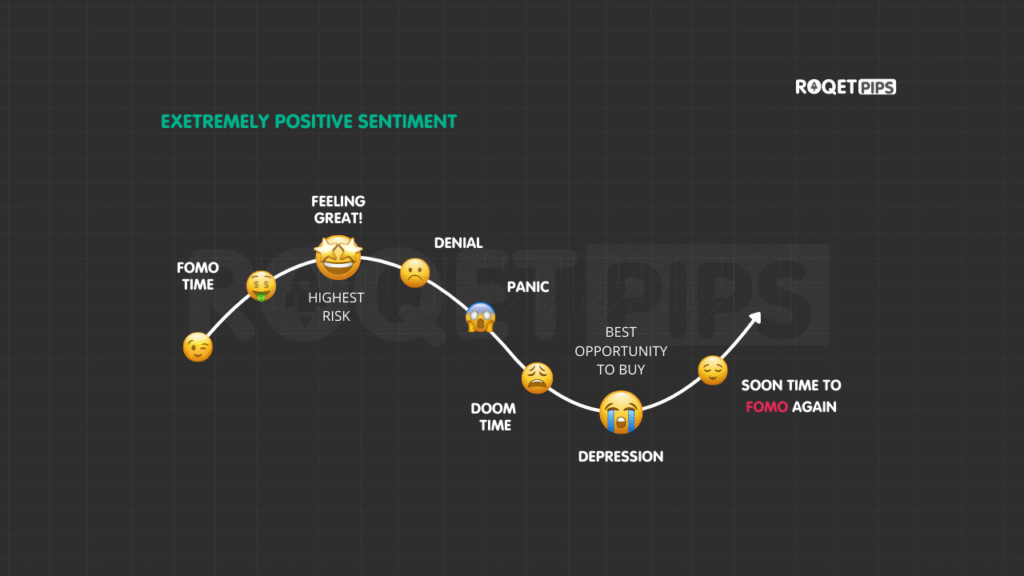
The biggest misunderstanding is the belief that “following the trend” is the same as FOMO. A trend is a sustained move backed by structure; FOMO is a late-stage reaction to a move that has already happened.
Traders often misuse indicators like the Relative Strength Index (RSI) to justify FOMO. They see a high RSI and assume the “momentum” is too strong to stop. In reality, an extremely high RSI (overbought) after a vertical move is often a signal that the FOMO has reached its peak and a correction is imminent.
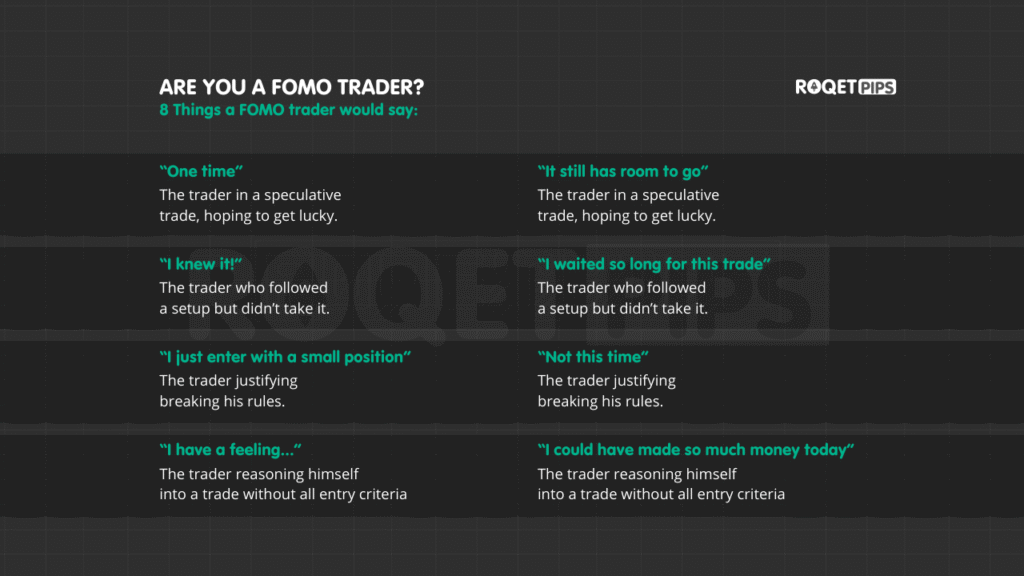
Finally, traders often misunderstand the role of social media. They see many people posting about a specific move and take it as “confirmation” of their bias. In professional trading, when everyone is talking about the same move, it is usually a signal that the move is overcrowded and nearing a point of failure. Overcoming FOMO requires trusting the chart data—volume, moving averages, and support levels—over the narrative of the crowd.
Category: Trading Psychology
Tags: volatility, price movement, trend behavior, market psychology, risk management, liquidity
Leave a Reply