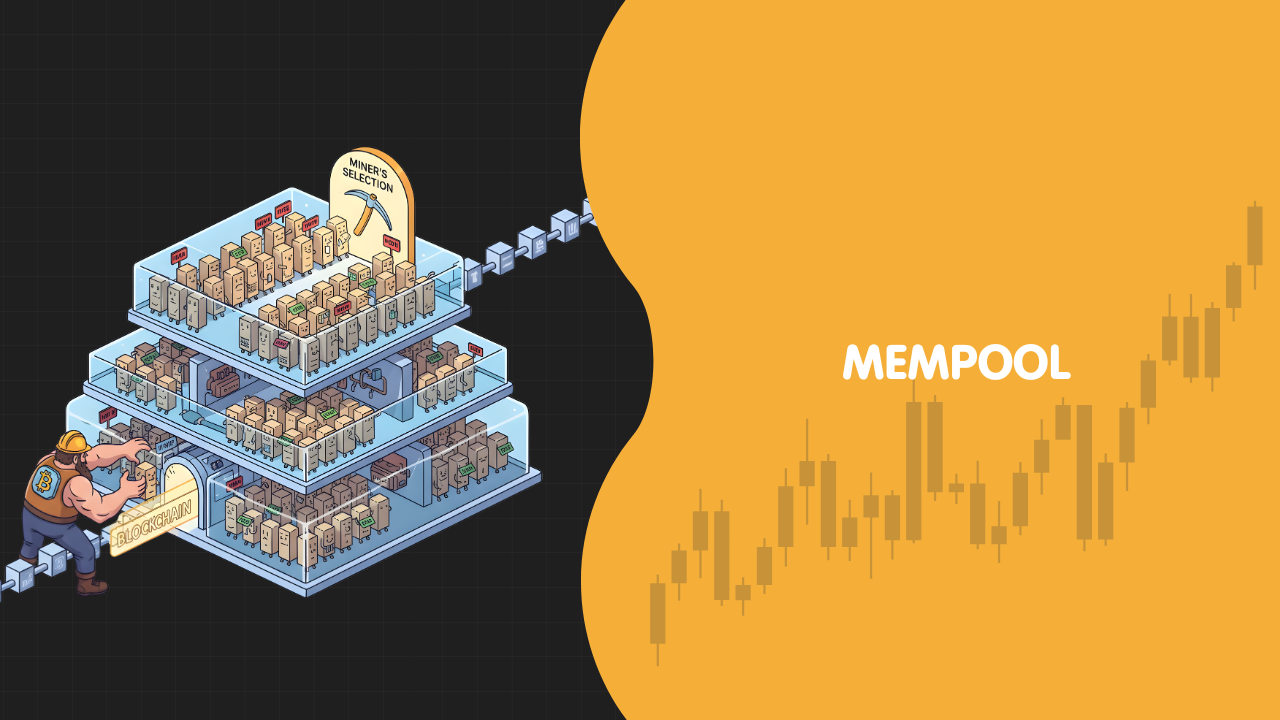
In the context of blockchain operations, a “mempool” is a fundamental component that exists behind every price movement you see on a chart. Before a trade is finalized and recorded permanently on the ledger, it must pass through this digital waiting room. Understanding the mempool is essential for traders who need to understand why their orders might be delayed and how network congestion impacts the speed of price discovery.
What is a Mempool?
A mempool, or memory pool, is a decentralized queue of pending transactions. Every time a market participant sends a transaction, it doesn’t immediately enter a “block.” Instead, it is broadcast to the network and sits in the mempool. Here, it waits for validators or miners to pick it up and include it in the next available block.
Traders often misunderstand the mempool as a single, central waiting room. In reality, every individual node in the network maintains its own version of a mempool. It is a buffer zone where transactions are sorted and prioritized. For a trader, the state of the mempool is a direct indicator of network “pressure.” When the mempool is full, the network is congested; when it is nearly empty, transactions move almost instantly.
[ADS]
How does a Mempool Work?
The mempool functions as a fee-based auction. Because space in a blockchain block is limited, validators want to maximize their revenue by selecting transactions that offer the highest rewards.
When you look at a chart during a high-volatility event—such as a massive price breakout—thousands of traders simultaneously broadcast orders. All these transactions hit the mempool at once. Validators will naturally pick the ones with the highest fees first. This creates a “bidding war” in the mempool. If your transaction fee is too low during these moments, your trade will remain stuck in the mempool while price continues to move without you.
[ADS]
How Long Does a Mempool Transaction Take?
The time a transaction spends in the mempool is directly proportional to two factors: the network congestion and the fee attached to the transaction.
During periods of “mempool bloat,” the number of pending transactions exceeds the capacity of the next several blocks. This often happens during major market crashes or hype cycles. For a trader trying to move assets to an exchange to sell, a bloated mempool can be disastrous. If the transaction stays unconfirmed for hours, the price on the chart may have dropped significantly by the time the trade actually clears.
To solve this, some networks allow for “fee bumping.” If you see your transaction is stuck in the mempool while the price is moving against you, you can broadcast a new version of that transaction with a higher fee to move it to the front of the queue. Monitoring the mempool effectively allows a trader to anticipate execution delays and adjust their urgency accordingly.
Category: Crypto Tags: mempool, blockchain, transaction fees, network congestion, liquidity, validators, blocks
Leave a Reply